Sunday, November 26, 2006

Dr. Spock: An American Life by Thomas Maier


It is hard to overestimate Dr. Spock's influence--he taught all those hands how to rock the cradle. Maier's book did an excellent job of exploring his life and exploding the myth of his "permissiveness" (which I had always believed accurate but now see as a political attack raised not by his book but by his opposition to the Vietnam war before it was cool). Maier deftly elucidates the failures of Spock's personal life in a way that makes him seem not a hypocrite but rather a flawed man. Highly recommended.

Wednesday, November 22, 2006

Case Histories by Kate Atkinson

Didn't live up to the hype ("Best mystery of the decade"--Stephen King) and was kinda vulgar. Ugh.

Sunday, November 19, 2006

The Tale of Despereaux by Kate diCamillo

I read this to the boys and we all adored it--a book nearly perfect in every way. Highly recommended.

Wednesday, November 15, 2006

The Young Joseph Williams Trilogy by Dean Hughes


I read these to the boys because they were the only juvenile historical fiction about Church history that I could find. They weren't that good: the plots plodded, the characterization was flat, the writing was lame. The third volume was slightly better in that it took on some heavy issues of Mormon culpability in Missouri (my five year old knows about Danite excesses now), but I still can't recommend these.

Tuesday, November 14, 2006

Skipping Christmas by John Grisham


I needed some mind candy on Sunday; this fit the bill.

Sunday, November 12, 2006

A Death in Belmont by Sebastian Junger


When the author was a baby, the Boston Strangler worked in his home. (Fortunately, his mother ignored his invitation to join him in the basement.) This book is fascinating (and, of course, unpleasantly graphic at certain points)--nothing like a good mystery.

Wednesday, November 08, 2006

Year of Wonders: A Novel of the Plague by Geraldine Brooks


To me, novels either "work" or they don't: they either succeed in creating a world--or they don't. This one worked and it was a joy to read even though the topic was horrific and the details graphic. (The only sour note was the revelation at the end of the rector's character.) This is the kind of book that would lead to excellent book group discussions (although it might have a smidge too much sex and violence for some book groups). Recommended.

Tuesday, November 07, 2006

Thunderstruck by Erik Larson


Erik Larson is one of my all-time favorite writers: Isaac's Storm and The Devil in the White City rank along with Thunderstruck as three of the best non-fiction books I have encountered. I did think the pacing was a little off on this one, but it was still very good.

Tuesday, October 31, 2006

The Life of Pi by Yann Martel


Hmmm. I'm not sure about this. It was a quick read, it kept my attention, it was funny and horrifying. I'm still playing around in my mind with the ending. I may need to get back to you on this one.

Sunday, October 29, 2006

The Gospel According to the Simpsons by Mark Pinsky


This book was pretty lame. Very little analysis--just plot summaries from The Simpsons.

Orrin Porter Rockwell by Harold Schindler


This book is an excellent example of what I consider to be an overriding problem with early Mormon history: every source is either Mormon or virulently anti-Mormon. Schindler makes liberal use of some of those anti sources in this book and so I found it difficult to determine how likely the various reports of Rockwell's evil deeds were. He was more myth than man and I can't say that I trust all the stories of his nefariousness. At the same time, he wasn't a choirboy. This was an interesting read, but it was also almost as frustrating as I find historical fiction since I just couldn't decide what to believe.

Monday, October 23, 2006

Spook: Science Tackles the Afterlife by Mary Roach


I loved Roach's first book and this one was equally weird and wonderful. She explores all sorts of paranormal phenomena in a light-hearted, Dave Barryesque sorta way. Recommended.

Secret of the Andes by Ann Nolan Clark


We read this because we were covering Peru in history; the boys liked it but it didn't do much for me.

Saturday, October 21, 2006

The United States of Arugula by David Kamp


This was a good history of the creation of "American food" over the last fifty years--not life-alteringly good, but good.

Wednesday, October 18, 2006

Uh-Oh by Robert Fulghum


What's not to like about Robert Fulghum?

Tuesday, October 17, 2006

Ten Circles Upon The Pond by Virginia Tranel


This was a very unusual, very successful memoir by the mother of ten children. She managed the mix of day-to-day details, life-defining moments, and reflections on faith and feminism in a masterful way. Recommended.

Monday, October 16, 2006

La Bella Figura by Beppe Severgnini


I loved this book because my husband surprised me with it after he heard an interview with the author on NPR. The content was mediocre, but surprise books from the dh are my brand of flowers.

Thursday, October 12, 2006

The Lost: A Search for Six of Six Million by Daniel Mendehlson


This was fabulous--a sort of Holocaust "Roots" but a narrative of discovery instead of a fictionalized account. Words fail me with this one to some extent, but his meditations of life, memory, place, family, and history are pretty amazing. The fact that he was able to discover so much information about his lost relatives is even more amazing. Highly recommended.

Tuesday, October 10, 2006

Jesus Christ and the World of the New Testament

Book Cover


It looks like a coffee table book but it reads like top-notch scholarship.


I read this to the kids this week; it was good but not outstanding. I was amazed at how difficult the vocabulary was for a children's book and figured that for sure my kids would lose interest when they couldn't follow the story, but they hung in there and said they really liked it. Go figure.

Saturday, October 07, 2006

The Great Plague by John M. Barry


This was disappointing. The 1918 flu epidemic is a fascinating story, but this book gets lost in the personal histories of the scientist who were on the front lines. I was surprised, since Barry's Rising Tide was fabulous.

Sunday, October 01, 2006

Brief Notes

This weekend I read:

Preach My Gospel: A Guide to Missionary Service

Isaiah for Airheads by John Bytheway

The Ten Virgins by Emily Freeman

The first isn't really the kind of book you review and the second two fall under "if you can't say something nice . . ."

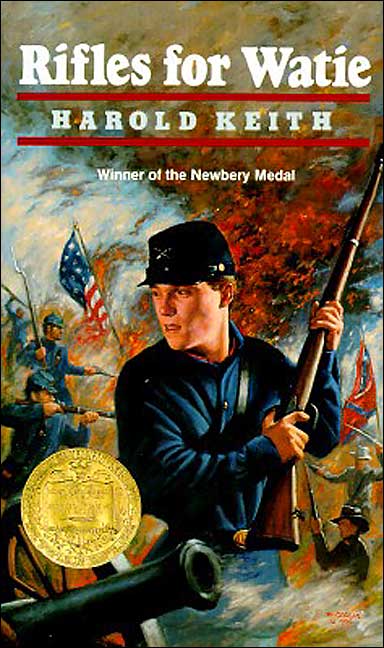
Rifles for Watie by Harold Keith


I read this out loud to the boys and we all loved it--what a treat.

Saturday, September 30, 2006

Yearning for the Living God by F. Enzio Busche

This was pretty good-it had some excellent and some unusual moments. Not the best GA biography I've ever read, but certainly worth the time.

Wednesday, September 20, 2006

New Moon by Stephenie Meyer


Ack. This was a trainwreck. I didn't think anything could live up to Twilight, but this wasn't even in the same ballpark. Ack.

Monday, September 18, 2006

The Honey Thief by Elizabeth Graver


This book was average in a mediocre sort of way.

Tuesday, September 12, 2006

Twilight by Stephenie [sic] Meyer

This is way high on the list of best books that I have ever read. The strange thing is: I cannot really figure out why. I wouldn't say that the writing was extraordinary, the plot was somewhat predictable, and did I mention that it was about vampires? But there was something about this story that just sucked (ha!) me in. I think the vampire backdrop serves as an extraordinarily good metaphor for teenage angst--maybe that was it. In any case, this one is highly recommended.

Monday, September 11, 2006

Intuition by Allegra Goodman


This is an excellent novel: an engaging story with interesting thoughts on science, gender, politics, etc. Recommended.

Saturday, September 09, 2006

Theodore Rex by Edmund Morris


Bah. This is the second time that I have gotten hundreds of pages into a biography of Theodore Roosevelt only to decide that I hated it (despite a few interesting anecdotes).

I suppose TR just isn't my guy.

Thursday, August 31, 2006

Power from on High: The Development of Mormon Priesthood by Gregory Prince

This didn't do a whole lot for me; I'm not entirely sure why. I ended up just skimming most of it.

Wednesday, August 30, 2006

Standing in the Rainbow by Fannie Flagg

I'm not sure how I felt about this: the plot was loopy and meandering, but the characters were somewhat endearing. Eh.

Sunday, August 27, 2006

The Twelve Little Cakes: Memoir of a Prague Childhood by Dominika Dery

This was a good story; I wouldn't bet the farm on every anecdote being 100% accurate, but this was an enjoyable read despite my slight distrust of the author.

The Book of Revelation by G. K. Beale

At over 1200 pages, this was a good commentary. If it had had an excellent editor and 700 pages, it would have been a great commentary. In other words, it was a little flabby.

The Book of Revelation by Robert Mounce

This book has confirmed my suspicion (after doing Leviticus and parts of Ezekiel as well) that NICOT/NICNT is the single best commentary series around. This title was great--amazingly concise and yet filled with great stuff. Recommended for anyone who wants to study Revelation.

Sunday, August 20, 2006

Juanita Brooks: Mormon Woman Historian by Levi Peterson

This is a fabulous and important book. Brooks is up there with Laurel Thatcher ulrich in my pantheon of heroes: Mormon women who persued their academic interests while raising their families. Her story is fascinating and her work on the Mountain Meadows Massacre is of lasting importance. This book had just a little flab that could have been trimmed, but is still highly recommended.

Saturday, August 19, 2006

Thinning the Herd--Take Two

It's that time again. Here's what I took to Half Price Books today:

Mountains beyond Mountains by Tracy Kidder

Flu by Gina Kolata

Molecules at an Exhibition by John Emsley

The Sleepwalkers by Arthur Koestler

Patenting the Sun by Jane Smith

Walk on Water by Michael Ruhlman

Stiff by Mary Roach

The Prize Winner of Defiance, Ohio by Terry Ryan

blink by Malcolm Gladwell

The Tipping Point by Malcolm Gladwell

Complications by Atul Gawande

Blue Latitudes by Tony Horowitz

The Handmaid's Tale by Margaret Atwood

The Devil in the White City by Erik Larson

The Good Earth by Pearl Buck

Isaac's Storm by Erik Larson

In a Sunburned Country by Bill Bryson

Personal History by Katherine Graham

Honeymoon in Purdah by Alison Wearing

Fortunate Son by Lewis Puller

The Secret Life of Bees by Sue Monk Kidd

The Mermaid Chair by Sue Monk Kidd

Alexandra by Carolly Erickson

The Emperor of Ocean Park by Stephen Carter

The Lovely Bones by Alice Sebold

Crossing to Safety by Wallace Stegner

Lindbergh by A. Scott Berg

Cheaper by the Dozen by Frank Gilbreth

Christmas Books by Charles Dickens

Snow Falling on Cedars by David Guterson

The Kite Runner by Khaled Hossenini

Bodies in Motion and at Rest by Thomas Lynch

Unto the Sons by Gay Talese

Nisa by Marjorie Shostak

Ship of Gold in the Deep Blue Sea by Gary Kinder

The Girl in the Picture by Denise Chong

Rising Tide by John Barry

Complete Works of Wlliam Shakespeare

Family Matters by David Guterson

Kingdom of Children by Mitchell Stevens

Dictionary of First Names

On Becoming baby Wise

The Best Baby Name Book

The Island of Lost Maps by Miles Harvey

Dust Tracks on a Road by Zora Neale Hurston

Their Eyes Were Watching God by Zora Neale Hurston

Collapse by Jared Diamond

Why We Eat What We Eat by Raymond Sokolov

American Pie by Pascale Le Draoulec

The Poisonwood Bible by Barbara Kingsolver

Fast Food Nation by Eric Schlosser

Under the Tuscan Sun by Frances Mayes

The Undertaking by Thomas Lynch

Lenin's Tomb by David Remnick

Saturday, August 12, 2006

Word Biblical Commentary: Isaiah (Volumes 34 and 35)


This was OK, but just OK. I'm not sure how much to blame the commentaries I read and how much to blame Isaiah, but this was a very disappointing experience for me. It may be that the Book of Mormon led me to expect to get so much out of Isaiah, and it just didn't happen. It may be that I was expecting to 'get' Isaiah in a way that I hadn't before, and that (despite the hundreds--thousands--of pages I read) didn't happen. I don't know. In any case, this is the first time that I have studied a book in depth only to like it less at the end than I did before. Again--whether the fault belongs to the commentaries I read or other factors, I can't say. But I'm sure glad I'm done with Isaiah.

The Prophecy of Isaiah by J. Alec Motyer

This is a solid commentary. I wish he had spent a little less time defining words, and there is a certain 'spark' I get from the truly great commentaries that wasn't here, but this was OK. If it sounds like I'm darning with faint praise, it is because I am.

Isaiah: Prophet, Seer, and Poet by Victor Ludlow

This is the only LDS commentary that I have ever read that is worth recommending. I think he occassionally adopts traditional LDS positions that don't have enough to support them, but for the most part, this is responsible scholarship. At the same time, I think it only removes about 40% of the Isaiah fog--readers who want more than that will be disappointed.

Thursday, August 10, 2006

Misquoting Jesus: The Story Behind Who Changed the Bible and Why by Bart Ehrman

This is an important and fabulous book. Very little of the material was new to me, but it was still a very useful read to have a basic introduction to textual criticism wrapped up in a nice, neat little package instead of scattering all over--the way that I picked it up in school. While this book would be a killer for someone who thinks the scriptures are inerrant, I think a fairly conservative Saint could handle it--the confirmations of the Church's attitude toward scripture ("insofar as it is translated correctly" and "corrupt and designing priests" come to mind) will be enough to tide them over through the tough parts. (I don't think most people know that the story of the woman taken in adultery is not original to the text.) This book is highly recommended to anyone with any interest in the Bible and is essential reading to anyone who wants to seriously study the scriptures.

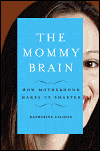
The Mommy Brain: How Motherhood Makes Us Smarter

I just wasn't that interested in this. The thought that chemical changes brought on by pregnancy, lactation, and mothering might permanently change brain chemistry is certainly interesting, but I don't think there is enough data to really make her case. One can only read the phrase 'rat mother' so many times . . . and then the obligatory liberal-agenda-to-make-working-motherhood-painless at the end was extremely annoying.

Sunday, August 06, 2006

T. Edgar Lyon: A Teacher in Zion by T. Edgar Lyon, Jr.

Brother Lyon, along with Lowell Bennion, taught at the U of U Institute in its formative years and represented an early, liberal strand of the CES. Lyon and Bennion left the U of U under unpleasant circumstances in 1962. T. Edgar Lyon's story may not be for the generalist, but it captures important data points in the growth of CES and the dramatic changes that affected the Church throughout the twentieth century.

Friday, August 04, 2006

The Lemon Tree by Sandy Tolan

I listened to this on our Utah trip; it was phenomenal. I suppose I was expecting a quaint story of how a Jew and a Palestinian became friends; their tortured friendship is about ten percent of the book--the rest is a concise and fascinating history of Israel/Palestine. I had no idea how much I didn't know until I listened to this. Highly recommended.

Thursday, August 03, 2006

King Leopold's Ghost by Adam Hochschild

(I reviewed this a few weeks ago but apparently my review is lost in cyberspace.)

This was a tremendous book--absolutely required reading. King Leopold of Belguim was a fascinatingly diabolical character and his exploitation of the Congo was beyond belief. And, as if all of that isn't bad enough, as the story is winding down and things seem to normalize, we find out that the CIA killed the first democratically-elected leader of the Congo. Unbelieveable. This well-written tale is much stranger--and more interesting--than fiction.

Morning by Morning: How We Homeschooled Our African American Sons to the Ivy League by Paula Penn-Nabrit

This was disappointing. I suppose I imagined a WTM-type book, but this was short on details and long on her tale of racial woe. I 'get' the idea that the real problem in this country is that if you are a minority, you never know if the waitress' rudeness is because of her or because of you, but I seriously doubt that the stewardess who saw her family sitting in first class and asked, "What are they doing here?" was making a racial statement. Unless they were flying Confederate Air, I suspect such sentiments (which may very well exist) would at least be kept under wraps. In any case, there were a few interesting tidbits about homeschooling in general and about the juxtaposition of homeschooling and racial issues, but for the most part, this felt like a moralizing rant. Not to mention a bit of false advertising: How could that subtitle neglect to mention that one of those sons was kicked out of Princeton? Which brings us to a bigger issue: apparently their effort to have [almost] exclusively African or African-American male tutors backfired. This almost turns the book into a cautionary tale, but you'd never guess that from Penn-Nabrit's tone.

Monday, July 24, 2006

The Blind Assassin by Margaret Atwood

I didn't like this at all. I hate novels that make me feel stupid and I don't think it clever to withold the identity of major characters. It felt like Atwood was being cheap, lazy, and acting like a circus barker. Ack.

Wednesday, July 19, 2006

Benjamin Franklin by Walter Isaacson

This started out as an amazingly strong read and then got a little flabby what with all the diplomacy. But that may be me--I've never been much for diplomacy. Slightly recommended.

Candy Freak by Steve Almond

I listened to the audio of this book on the Texas-Utah trip. It was perfect car audio: light, humorous, and made me wanna snack. I imagine that if I had actually read it, however, it would have felt like empty calories.

Saturday, July 08, 2006

Book Reviews: Juvenile Non-Fiction

If you are an adult, inevitability comes in the form of death and taxes. If you are a child, it comes as the middle school research project.

This means that there is an entire genre of books geared to children of that reading and maturity level on the entire spectrum of possible paper topics. And this, in turn, means a handful of titles about the Church. I want to review some of these books since they will be, for perhaps thousands of children, their first exposure to the Church of Jesus Christ of Latter-day Saints.

Book Cover

Mormonism by Corinne J. Naden and Rose Blue

The first thing we have to grapple with here is the cover, which is a scene from the Hill Cumorah pageant. I wish they had chosen something else since this shot conveys the impression that Mormons spend their time wearing klan robes and blowing on really long trumpets. The same picture is reproduced inside the book, where a caption noting that “Mormons believe that humans are potential gods” only makes it weirder. The idea of human deification is mentioned at least a half dozen times in this book; by contrast, there are virtually no references to Jesus Christ.

Of course, members, sympathizers, and antis will have different opinions as to what constitutes an appropriate emphasis for a book on the Church. But errors of fact are quite a different matter and this book is riddled with them. Here are some things that children will find in this book:

–Church members use ‘thee’ and ‘thou’ in talks.
–The church forbids interracial dating marriage.
–”The church itself is governed exclusively by Americans.”
–The infamous (and retracted) statement that “when our leaders speak, the thinking has been done.”
–The church threatens to excommunicate those who don’t pay their tithing.
–”The family home evening is an example of how the Mormon Church controls most private aspects of life.”
–”Members [of the Relief Society] often serve as home-visiting teachers.”
–Women are discouraged but not forbidden to serve as Sunday School presidents.
–The Book of Mormon is a history of people “who had lived in Central America thousands of years before the time of Jesus.”
–”At the temple baptism ceremony, the person standing for the dead is ritually washed, anointed with oil, and dressed in white temple garments.”
–A picture showing an LDS couple with their food storage is tagged “Mormons take practical steps to prepare for the millenium.”
–Seminary consists of “after-school study classes.” (Don’t they wish!)
–An endowment is performed “once in a lifetime.”
–”Finally, they go to the celestial room, where presumably the actual [endowment] ceremony is performed.”
–A reference in the section on MoTab to “the temple’s magnificent organ.”
–References to “celestial heaven” and “Relief Society of Women.”
–The chapter on Mormon doctrine has virtually no mention of Christ, but subsections titled “Polygamy,” “The Millenium,” and “A Clannish People,” where we learn that “the general belief is that if a non-Mormon family moves next door to a Mormon family, the newcomers will be treated kindly, but they will never be more than casual neighbors.”

The structure of the book is also frustrating, as it shuttles between a historical narrative and sections on people and doctrine. This means that some topics are mentioned repeatedly, such as–of course–polygamy. And while Joseph Smith and Brigham Young get a few chapters, one gets the sense that the Mormons haven’t done anything in the 20th or 21st centuries. In other words, this book is not so much about “Mormonism” as it is “19th Century Mormon History.”

GRADE: D+ I did not think they were hostile so much as they were misinformed. Each of the authors is credited with dozens of children’s books; neither is an expert on the Church. It seems a pity that they couldn’t have asked one real member to review the book; so many little mistakes and, perhaps, big problems of emphasis could have been fixed.

Book Cover

Mormon Faith in America by Maxine Hanks and Jean Kinney Williams

One would have thought that with an actual (albiet former: Hanks was one of the ‘September 6′) Mormon as the author, there would be fewer errors in this book than in Mormonism. Surprisingly, this is not the case; here are some things that your neighborhood middle school student will learn from this book:

–The Nauvoo temple was “the first temple built by early members of the church.” (Later on, a picture of the Kirtland Temple is labelled the first temple.)
–Lesbian and gay members are “excommunicated when they reveal their sexual orientation.”
–A patriarchal blessing is given by “a patriarch or elder.”
–The dedication of graves is one of the temple ceremonies.
–CES has offered elementary and secondary education in underserved areas since 1977 (actually since the late 19th century) and “it now operates about 10,000 elementary or secondary schools.”
–Missionaries serve in “over 200 countires” (lds.org lists 141 countries; while it is debatable, most sources list the total number of countries in the world as about 193). Similarly, there are LDS congregations in “more than 200 countries.”
–From a timeline under the year 1852: “a revelation that polygamy is no longer to be practiced is announced publicly.”
–”Missionaries are discouraged from watching television.” (You can just see it, can’t you: “But President–it’s only discouraged!”)
–RMs get a tuition discount at BYU.
–Pioneer Day is “like Christmas and the Fourth of July in one.”
–Family Home Evening means “shar[ing] a meal and perhaps scripture readings together.”
–President Hinckley has a “program” to “further integrate the LDS Church into the mainstream and has called upon members and observers alike to stop referring to the Church as Mormons or even Latter-day Saints, but simply as the Church of Jesus Christ.”
–Mormons never practiced polyandry.

There are also numerous typographical errors: “Jeredites,” “nearly 112 million members worldwide,” “Thurim and Umim,” and “the national tragedy [on] September 11, 2002.”

You can see the hand of not only a Mormon but a Mormon intellectual in this book. When she introduces the Book of Mormon, she describes it thus: “The book was said to have been inspired by God, with the gold plates being used as a sort of code-breaker that enabled Smith to decipher the word of God, as given to him by the angel.” That’s a definition only a liberal Mormon could love! Similarly, the subsection “Women and the Mormon Priesthood” is precisely the same size as “Mormon Priesthood,” which is an allocation of attention that only a liberal could love. Hanks writes that “women share in the priesthood with their husbands, and they perform women’s priesthood rites in the temples. Mormon women in the 19th century participated more in priesthood functions–such as blessings and healings–were ordained to offices, and presided over the women’s Relief Society.” Later, the book notes that “blessings are also given for those who are ill or in need, or by a father or mother.” On a timeline with less than 20 dates, we learn that in 1930 “women’s blessings and ordinances are forbidden.” (The perceptive reader will note that this contradicts the previous data points.)

GRADE: D+ Like Mormonism, this text becomes terribly confusing and redundant as it alternates between historical and theological topics. This title does do a better job (but only slightly) on 20th century church history. The definitions for LDS terms in the sidebar are also helpful. But the errors and misrepresentations are disturbing, especially coming from an author who should know better.

Book Cover

The Mormons by Jean Kinney Williams

Interestingly, Jean Kinney Williams is listed as the second author on the Hanks book. But this book is an entirely different beast. What is most notable is that the prose is substantially better: it reads like a story, not a textbook. That alone is enough to recommend it. There are very few questionable lines (the worst I could find was: “Joseph said that The Book of Mormon, with its story of the ancient band of Israelites who fled to the New World, contained all the information necessary about how the church was to be structured in modern times.”) and no obvious errors. The book feels even-handed. It doesn’t sound like it came out of correlation, but neither does it read as if the author is only shallowly acquainted with the Saints or has a deeper need to ax-grind. While it is limited, as the other books are, to black and white illustrations and photos, the pictures are sharp and interesting. And the book doesn’t alternate between doctrine and history like the other titles do: it proceeds strictly chronologically and therefore flows much more smoothly. But this means that there is very little in the book about current church practice; “A History of the Mormons” would have been a better title. But the summary of “Mormon life” that she squeezes into a few brief pages at the end is not only error-free and surprisingly successful at capturing the feel of the church, but also interesting. Instead of simply giving a laundry list of Church programs, she explains them through the lens of the life of one LDS family. This is an excellent book.

GRADE: A Even-handed and accurate.

Book Cover

I Am a Latter-day Saint (Mormon) by Gayla Wise

To be fair: this book is an entirely different genre from the last three; it is aimed at emergent readers, perhaps a first-grader learning about individual differences. Our family has read several titles from this series (I Am a Hindu, I Am Jewish, I Am Muslim) and they are charming. Since they are written from the point of view of a child who is an adherent, they have a sweetness about them that is unparalleled: “My favorite part of the Book of Mormon is when Jesus visits the people of the Americas right after his death and resurrection.” I was very pleased to see that, after a brief introduction, the very next page was a statement about Jesus Christ. This book is nearly perfect in every way: it covers basic doctrine and lifestyle, it is fair, and the emphasis is right. I think all Saints would recognize their church in this book and feel that they had been fairly treated. This would be a good title to read to LDS children, to share with a nonmember neighbor, or to donate to your elementary school’s library.

GRADE: A+ I can’t really think of any way to improve on this book.

A final note:

All three of the books geared to middle school students addressed polygamy at length, as well as other elements of Church history that don’t make it through correlation. I’m working through in my mind the ramifications of a good little Mormon kid who decides to do a research report on the Church (”It’ll be a missionary opportunity when I do my class presentation!”) and finds on page 20 that Joseph Smith married a sixteen-year-old girl who lived in his home in Kirtland and then lied publicly about his marriages. Even more cringe-inducing is the thought of a Primary-age child reading the descriptions (some accurate, some not) of the temple ceremony in the Naden and Hanks books. This is more food for thought in the ongoing discussion of the best way to approach the more complicated issues in Church history.

The Emperor of Ocean Park by Stephen Carter

This was an excellent book: it worked on so many levels. It was a great thriller, well written, with trenchant tidbits of commentary on everything from race, class, academic politics, and the arrogance of (some) childhood development gurus worked in. Highly recommended.
Monday, July 03, 2006

The Amateur Marriage by Anne Tyler

So on the one hand I enjoyed reading this but on the other, I felt cheated somehow when it finished--as if I were waiting for something to happen that never did. Tyler has a reputation for writing about the ordinary lives of ordinary people. I suppose if that is what you are in the market for, this would be a fine choice. But as an ordinary person living an ordinary life, I want my fiction to be something else, and this wasn't.

Blog Archive