 By turns fascinating and tragic, this tale of a childhood on the run from the authorities is a compelling read.
Saturday, July 28, 2007
Predators, Prey, and Other Kinfolk: Growing Up in Polygamy by Dorothy Solomon
By turns fascinating and tragic, this tale of a childhood on the run from the authorities is a compelling read.
Wednesday, July 25, 2007
Homeschooling by Samuel Blumenfeld
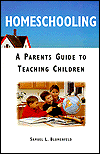 This book was a nice blend of hysterical fearmongering related to public schools and homeschooling advice too vague to implement (but concrete enough to inspire guilt). Most highly unrecommended.
Saturday, July 21, 2007
Harry Potter and the Deathly Hallows by J. K. Rowling
 I thought it was wonderful and the ending was exactly right. (For some reason, I didn't care too much for the epilogue, however.)
Monday, July 16, 2007
Genesis 1-4 by C. John Collins
 Collins has a handful of interesting insights here, but overall this book was a disappointment.
Friday, July 13, 2007
New England White by Stephen Carter
 So: I could guess the ending within the first hundred pages, the book consisted almost entirely of unbelievable coincidences, the story was hard to keep track of, and the ending was disappointing. But I still kind of liked it.
Wednesday, July 11, 2007
How Doctors Think by Jerome Groopman
 Contains some interesting thoughts on the cognitive processes that doctors use to make diagnoses (and misdiagnoses). Not earth-shatteringly good, but fairly interesting.
Sunday, July 08, 2007
Little Heathens by Mildred Kalish
 Reminiscent of the Little House books (but with adult content), this memoir of life on a farm during the Great Depression was delicious and thought-provoking. It would make for a great book-group discussion. Recommended.
Thursday, July 05, 2007
Genesis by Nahum Sarna
 Well: the book itself is a work of art and the commentary was wonderful. It is a shame that the JPS is so expensive, but sometimes you get what you pay for.
Genesis as Dialogue by Thomas Brodie
 His basic thesis is that the stories in Genesis all form diptychs. In some cases, this seems true; in others, it seems forced.
The Savior and the Serpent by Alonzo Gaskill
 There were a few interesting insights and questions in this book, but overall I was very disappointed in it. There were some glaring errors, but the biggest flaw was that he spent most of the book castigating some people for taking the text too literally and others for not taking it literally enough without ever making it clear by what metric we determine how to take what. His overall thesis is unconvincing.
Wednesday, July 04, 2007
House Thinking by Winifred Gallagher
 Some interesting data points here but mostly a mish-mash. Her room-by-room formula doesn't work so well when most of the info isn't room specific and this book is too short to try to combine examples, theory, and practice.
Genesis Vol I and II (Word Biblical Commentary) by Gordon Wenham
 This was a solid and useful commentary but not earthshaking.